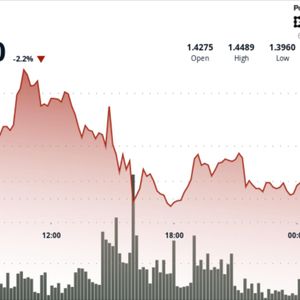
BitcoinWorld WTI Crude Oil Skyrockets Above $78.00 as Critical Middle East Conflict Disrupts Vital Supplies Global energy markets experienced a significant jolt today as West Texas Intermediate (WTI) crude oil prices surged decisively above the $78.00 per barrel threshold. This sharp increase, observed in early trading on March 21, 2025, stems directly from escalating military conflicts in the Middle East that are disrupting crucial maritime supply routes and threatening regional production stability. WTI Price Surge Reflects Immediate Market Anxiety The benchmark WTI crude oil contract for May delivery climbed over 3.5% in Asian and early European trading sessions. Consequently, this move erased losses from the previous week and established a new two-month high. Market analysts immediately linked the price action to reports of renewed hostilities in key strategic zones. Specifically, these zones include the Strait of Hormuz and areas near major export terminals. Furthermore, the price movement demonstrates the market’s acute sensitivity to supply-side shocks. Trading volumes spiked significantly above the 30-day average. This indicates heightened participation from both speculative traders and commercial hedgers. The volatility index for oil futures also rose, reflecting broader market uncertainty. Anatomy of the Supply Disruption The disruption originates from two primary, interconnected factors. First, targeted attacks on energy infrastructure have forced temporary shutdowns at several key facilities. Second, increased maritime insurance premiums and rerouting of tankers are causing logistical delays. These delays add a “war risk premium” to the physical cost of each barrel. Data from global shipping trackers shows a 15% week-over-week decrease in tanker traffic through the most critical chokepoint. This bottleneck alone handles roughly 20% of global seaborne oil trade. The following table outlines the immediate impacts on key regional benchmarks: Benchmark Price Change Primary Driver WTI Cushing +$2.85 Global risk repricing, supply fears Brent Crude +$3.10 Direct regional exposure Dubai/Oman +$3.40 Localized supply constraint Geopolitical Context and Historical Precedents The current Middle East conflict sits within a long history of regional instability affecting energy markets. However, today’s situation involves more actors and advanced weaponry capable of targeting infrastructure precisely. Past events, like the tanker wars of the 1980s or the Abqaiq-Khurais attacks in 2019, provide context but not direct parallels. Energy strategists note that the market’s reaction is more pronounced than during similar incidents five years ago. This is due to lower global inventory buffers. According to the International Energy Agency’s (IEA) latest monthly report, OECD commercial stockpiles are 8% below their five-year average. Therefore, the system has less capacity to absorb a sudden supply shortfall. Major consuming nations are monitoring the situation closely. The U.S. Department of Energy stated it is “assessing market conditions” but has not yet indicated a release from the Strategic Petroleum Reserve. Similarly, European Union energy commissioners have convened an emergency meeting to discuss contingency plans. Expert Analysis on Market Mechanics Dr. Anya Sharma, Lead Commodities Strategist at Global Markets Insight, provided a technical breakdown. “The breach of the $78.00 level is technically significant,” she explained. “It represents a key resistance point that held for most of the first quarter. The sustained move above it, especially on high volume, suggests the market is pricing in a prolonged disruption rather than a transient event.” Sharma also highlighted the shifting term structure of the futures curve. “The prompt month contract is gaining on later-dated contracts, a condition known as backwardation. This tightening signals immediate physical tightness. Traders are willing to pay a premium for oil now versus oil in the future, which is a classic symptom of a supply scare.” Broader Economic and Sectoral Impacts The ripple effects extend far beyond the trading pits. Higher crude input costs immediately pressure refinery margins. This pressure typically translates into higher prices for refined products like gasoline, diesel, and jet fuel. Airlines and transportation companies often face the most direct hit to their operating expenses. Furthermore, the surge reinjects inflation concerns into global macroeconomic policy. Central banks, which have been cautiously eyeing interest rate cuts, may now pause. They need to assess whether a commodity-driven price spike could reverse recent progress on core inflation. The bond market reacted accordingly, with longer-dated yields edging higher on inflation fears. Consumer Energy Costs: Retail gasoline prices are projected to rise 5-10 cents per gallon in the coming weeks if the rally holds. Industrial Sector: Petrochemical and manufacturing firms with high energy intensity will see input costs climb. Equity Markets: Energy sector stocks are rallying, while airline and consumer discretionary shares are underperforming. Global Response and Alternative Supply Routes In response to the disruption, market participants are activating contingency plans. Some tankers are opting for longer routes around the Cape of Good Hope to avoid conflict zones. This adds roughly 10-15 days to voyage times and significantly increases freight costs. Meanwhile, other producers are attempting to fill the gap. U.S. shale producers represent the most agile source of additional supply. However, their response time is measured in months, not days. Pipeline and export terminal capacity constraints also limit how quickly additional American barrels can reach global markets. Similarly, output increases from members of the OPEC+ alliance are governed by complex quota agreements, not immediate market signals. Analysts are also watching Russian export flows. These flows have remained steady despite sanctions, often moving to alternative buyers like China and India. Any rerouting of these volumes could help alleviate Atlantic Basin tightness. However, logistical and payment hurdles complicate rapid adjustments. Conclusion The breach of the $78.00 level for WTI crude oil serves as a stark reminder of the energy market’s fragility in the face of geopolitical strife. The immediate price surge reflects a tangible fear that Middle East conflict will constrict the flow of vital supplies. While the market will continue to assess the duration and severity of the disruption, the event has already reshaped short-term price trajectories and inflation expectations. The stability of global energy supplies remains inextricably linked to regional security, a connection powerfully underscored by today’s market movements. FAQs Q1: What is WTI crude oil and why is it a benchmark? WTI, or West Texas Intermediate, is a grade of crude oil used as a primary pricing benchmark. It is a light, sweet oil primarily extracted in the United States. Traders and analysts use its price as a key reference for oil contracts worldwide, especially in the Americas. Q2: How does conflict in the Middle East affect oil prices globally? The Middle East holds a significant portion of the world’s proven oil reserves and critical maritime transit chokepoints, like the Strait of Hormuz. Conflict can directly damage infrastructure, halt production, or force tankers to take longer, costlier routes. This reduces immediate supply availability and increases costs, which global markets price in immediately. Q3: What is the difference between WTI and Brent crude oil? WTI is priced based on delivery in Cushing, Oklahoma, and reflects North American supply dynamics. Brent crude is sourced from the North Sea and serves as the benchmark for waterborne crude from Europe, Africa, and the Middle East. Brent typically trades at a slight premium to WTI due to transportation and quality differences. Q4: Could this price spike lead to a recession? While a sustained, sharp increase in oil prices acts as a tax on consumers and businesses, potentially slowing economic growth, a single spike does not guarantee a recession. The overall impact depends on the price’s persistence, the health of the global economy, and policy responses from governments and central banks. Q5: How do oil traders assess the risk of such geopolitical events? Traders monitor news feeds, satellite imagery of infrastructure and tanker traffic, insurance premium changes for shipping lanes, and official statements from governments and energy agencies. They use this information to gauge the likelihood of supply disruption and its potential duration, adjusting their positions in futures and options markets accordingly. This post WTI Crude Oil Skyrockets Above $78.00 as Critical Middle East Conflict Disrupts Vital Supplies first appeared on BitcoinWorld .